DAFOREST Technique: Meaning, Examples & How to Use It
DAFOREST Technique: Meaning, Examples & How to Use It
Confused by the DAFOREST technique? This guide breaks down all 8 elements — direct address, alliteration, facts, opinions, rhetorical questions, emotive language, statistics, and triplets — with real examples and common mistakes to avoid.
What makes some essays so hard to ignore? The answer often lies in a simple set of tools called the DAFOREST techniques — an acronym used in English to help students learn and apply persuasive writing devices like direct address, alliteration, facts, and more.
In this blog, you'll learn techniques like direct address to grab attention and alliteration to add catchy rhythm. Whether you're a student improving your writing or simply curious how words influence people, DAFOREST is genuinely useful. Let's discover what each letter stands for.
What Does DAFOREST Stand For?
DAFOREST is a handy acronym that helps students remember persuasive writing techniques, making writing more compelling and effective. Each letter represents a device used to grab attention, build strong arguments, and keep readers engaged.
D - Direct Address
A - Alliteration
F - Facts
O - Opinions
R - Rhetorical Questions
E - Emotive Words
S - Statistics
T - Triplets (Rule of Three)
These DAFOREST English techniques are typically used in speeches, essays, and advertisements — anywhere the goal is to persuade. They give you an easy way to spot what makes writing captivating, and using them in your own work helps you connect better with your audience.
Now that you know what DAFOREST stands for, let's look at how these techniques actually work.
If you're a beginner, you may find essays challenging at first — an essay typer tool can help you craft strong essays while incorporating these techniques convincingly.
Still Confused About DAFOREST Technique?
Get Expert Help To Craft Powerful, Persuasive and Captivating Arguments.
What Is the DAFOREST Technique? Explanation & Examples
DAFOREST is a popular technique that helps students build strong arguments using specific English language devices. These methods are simple to learn and highly effective when applied carefully — once you understand DAFOREST, you have a clear structure to strengthen your essay and connect better with readers.
Technique
Definition
Example
Effect on the Reader
Direct Address (D)
The writer speaks directly to the reader using words like "you," "your," and "we."
If you care about what the future holds, it's time to act now.
Grabs the reader's attention.
Makes the message personal and urgent.
Alliteration (A)
Words close together starting with the same sound; common in speeches, slogans, and headlines; adds rhythm to a sentence.
Factual statements that can be proven using credible sources; adds weight to any argument.
The Amazon rainforest produces an estimated 6-9% of the world's oxygen — far less than the widely repeated but inaccurate "20%" figure.
Enhances trust and confidence.
Gives the text a persuasive, authoritative tone.
Opinions (O)
A writer's personal feelings or beliefs; helps express passion and encourages readers to consider a new point of view.
(a) Burgers are better than pizza. (b) I believe school lunches should be healthier and more affordable.
Expresses personal views.
Aims to influence and persuade readers despite lacking hard evidence.
Rhetorical Questions (R)
Questions that don't seek an answer; create a dramatic effect to evoke emotion in the reader's mind.
(a) Who wouldn't want a better future for their children? (b) Isn't it time we all took responsibility for our planet?
Makes the audience feel more connected and involved.
Prompts the audience to pause, reflect, and agree with the point.
Emotive Language (E)
Words that evoke strong feelings; enhance impact and make content more relatable and persuasive.
(a) It was a tragic scene of families torn apart. (b) Her joyful laugh filled the room with warmth.
Triggers emotional response and draws the reader in.
Strengthens connection to the message.
Adds depth to your content, making it vivid and relatable.
Statistics (S)
Numbers and data used to support a point, strengthen an argument, appeal to logic, and build trust.
(a) A majority of people agree that recycling helps protect the environment. (b) Nearly one in four students say they experience significant academic stress.
Builds credibility by convincing with facts.
Makes the issue feel real and hard to ignore.
Triplets (T)
A group of three words or phrases; creates rhythm and makes writing powerful and memorable. Used by Winston Churchill and Martin Luther King in famous speeches.
(a) Peace, progress, and prosperity are the pillars of a strong nation. (b) She faced the challenge with courage, conviction, and clarity.
Grabs attention and makes the message memorable and impactful.
Sounds natural and pleasing to read.
Now that you've seen how each DAFOREST technique works, it's time to understand its real impact. If using this method still feels difficult, you can find academic experts online — some students search for do my assignment for me to get personalised assistance.
Why Use DAFOREST in Persuasive Writing for Students?
The DAFOREST method helps you connect with your audience more effectively. Using statistics in an assignment makes it more credible; emotive language, thoughts, and opinions can help demonstrate the human impact of historical events; and triplets add rhythm to speeches, making them memorable and persuasive.
Beyond exams, learning DAFOREST is genuinely useful because it helps you organise ideas — each technique plays a distinct role in convincing readers. For students, it builds confidence in expressing opinions clearly, a skill that matters well beyond school.
Top 5 DAFOREST Writing Tips for Academic Assignments
Here are simple, practical ways to bring DAFOREST techniques to life in your assignments.
1. Grab Attention With Rhetoric
Use rhetorical questions throughout your writing to provoke thought and encourage readers to reflect on your perspective.
2. Begin With a Strong Emotive Sentence
Open your essay with an emotionally charged sentence to capture attention quickly, set the right tone, and draw readers into the rest of your argument.
3. Blend Facts With Your Personal Opinion
Combining personal opinions with precise statistics creates a well-rounded argument that highlights your critical thinking while adding your own voice to the writing.
4. Power Up With Triplets
Grouping ideas in three creates a natural, memorable rhythm — think of Winston Churchill's speeches or Martin Luther King's "I Have a Dream."
5. Add Weight With Solid Statistics
Support your claims with credible, precise statistics to establish authority — concrete numbers strengthen any argument.
These DAFOREST methods help you craft persuasive, clear, and memorable writing. When academic pressure builds, smart strategies paired with expert online exam help can make things easier.
Get an Extra 5% OFF On Your Order in Our App
Scan the QR code with your mobile to unlock an exclusive offer!
How to Use DAFOREST Techniques in Academic Assignments
Here's how all 8 DAFOREST elements come together in a real essay about preventing wildfires:
Direct Address: "You and I both know we can't afford to wait any longer — wildfires are destroying homes and wildlife right now."
Alliteration: "Flames flicker fast, fuelled by dry forests and dwindling rainfall."
Facts: Cite trusted sources like the UK Forestry Commission to back up your claims with verified data.
Opinions: Share your own view — explain why protecting nature and communities matters to you, and suggest what could be done better.
Rhetorical Question: "Do we really want to stand by and watch more of our beautiful countryside burn?"
Emotive Language: "Families are losing everything — their homes reduced to ash in a matter of hours."
Statistics: "Wildfire incidents in the UK have risen sharply in the past decade, according to Forestry Commission data."
Triplets: Wrap up with three strong points — how wildfires threaten us, why prevention saves lives, and why acting now is essential.
Using DAFOREST like this makes your writing clear, convincing, and far more likely to grab your teacher's attention. Now that you know how to apply this in real academic writing, let's look at some common mistakes to avoid.
Common Errors in DAFOREST Techniques & How to Avoid Them
DAFOREST is a powerful tool, but a few common mistakes can undermine it.
Flooding your writing with every technique at once can dilute your message and overwhelm your audience.
Excessive emotive language can look manipulative — balance emotional appeals with logical reasoning.
Including statistics without explaining their source or relevance can hurt your credibility. Always cite reputable studies and explain why the figure matters to your argument.
Failing to acknowledge opposing views can make your work seem one-sided. Addressing counterarguments shows stronger critical thinking.
Blending in personal opinions is good, but over-relying on them weakens your argument. Support opinions with credible facts or expert views.
These are the pitfalls worth avoiding when working with this technique.
Final Thoughts
DAFOREST offers simple, effective devices to make your writing more persuasive. Each tool helps you capture attention, build strong points, and connect meaningfully with readers. With regular practice, you'll gain the confidence to make your ideas stand out — remember DAFOREST, and let your words leave a lasting impact every time.
If you find persuasive writing challenging, Assignment Desk offers expert academic writing services to help. Our assignment help UK ensures you get the support you need to succeed with confidence.
What is the DAFOREST technique?DAFOREST is a method to help analyse or create persuasive writing. It uses different techniques in writing like facts, opinions and emotive words to make arguments stronger and more convincing.
How Do I Identify the Different Elements of DAFOREST In a Text?You can look for clues like direct speech ( you or we), repeated sounds called alliteration, facts, numbers and strong feeling words ( emotive language). Also, you will find questions without answers and group of three words.
What does D mean in DAFOREST?The letter D in DAFOREST stands for Direct Address. This means speaking directly to the audience using words like “you” or “we” to make the message feel personal and involve the reader or listener.
What Is The Rule of Three In DAFOREST?The rule of three means using three words or phrases together to make ideas more memorable and powerful. It helps to create rhythm and emphasis and makes message more persuasive. For example- She was clear, calm, confident.
Choose a writer for your task among hundreds of professionals
Try Before You Buy !
Get Free PDF Link Directly to your WhatsApp!
Great!!Sumsa Free PDF Template has been delivered on your
WhatsApp Number.
Please rotate your device
We don't support landscape mode yet. Please go back to portrait mode for the best experience
We use cookies to ensure that we give you the best experience on our website. If you continue to use this site we will assume that you are happy with it. Know more



 Company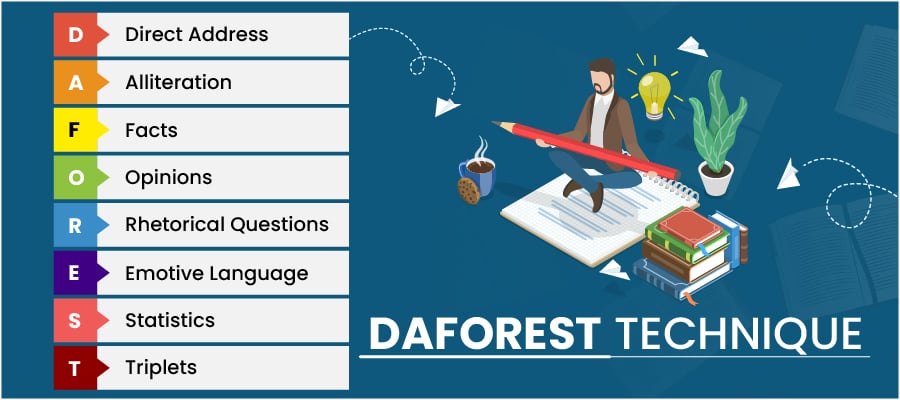
















 Update your Number