When you say you are interested in studying law, there are many sub-areas related to it. Do you want to know the difference between a civil case vs criminal case? Then this blog might give you some insights. There are distinct types of law, which include public law, private law, civil, corporate, etc. Since there are many types of law, there are different people who practice these. Now, since you are reading this blog, it is easy to assume that you are interested in or exploring one of the two laws, civil or criminal. Whether you are just browsing out of curiosity or need to know about the difference between civil and criminal law, the blog has you covered. After all, someday you may need to know the basics.
What Is Criminal Law?
Criminal law in the UK is part of law studies that deals with individuals and parties charged with criminal offences. It includes both the prosecution and defence of these individuals. There are only two results that individuals await: guilty and not guilty. Once the individual is found guilty, they will be punished for their crimes. They can face a prison sentence, a community order or a fine. The length and type of penalty are distinct and depend on the severity of the crime, previous criminal record, plea or age. To be found guilty, the standard proof presented must be beyond a reasonable doubt, so the jury or judges should consider it before making a decision. This section will provide you with the answer to the question “What is criminal law?”
Examples of Criminal Offences
Given below are some examples of criminal offences that can land the offender in court for trial, and these examples are of criminal offences in the UK:
Theft & burglary
Fraud
Supply and holding drugs
Affray
Money Laundering
Actual Body harm
Criminal Damage
Murder and Manslaughter
Sexual Offenses
What's the Consequence?
The consequences of criminal law cases are severe. These penalties for offences range from fines and community service to detention or even capital punishment, alongside a reputation going down by having permanent criminal records that lead to job/housing barriers, loss of licenses, restricted benefits and immigration issues, all aimed to punish the convicted individual.
Purposes of criminal law consequences include retribution, deterrence, incapacitation, rehabilitation and reparation. Therefore, it becomes a liability if the individual is on trial and found guilty.
Jurisdiction
The jurisdiction refers to the authority of a court or legal body that is present to hear and decide criminal cases. It determines where and how criminal cases will be prosecuted, depending on factors such as geographic location, the nature of the crime, and laws that apply in the place. The British criminal law system works in England and Wales. It is entirely different from those that exist in Scotland and Northern Ireland.
In cross-border cases between England & Wales and either Scotland or Northern Ireland, prosecutors also need to consider the laws of these distinct jurisdictions. If you have doubts related to the law subject assignment, use criminal law assignment help services.
Burden of Proof
In criminal cases, the burden of proof in criminal cases in the UK usually rests with the prosecution. It is the prosecution's duty to present evidence that proves the defendant's guilt. Furthermore, the defendant is presumed innocent until proven guilty. The only way to stop it is if the prosecution can prove the defendant's guilt.
The prosecution must prove that the defendant is not guilty beyond a reasonable doubt.
In brief, it means that the jury or judge must be convinced that there is no reasonable explanation or doubt about the defendant's guilt on the evidence presented.
Struggling to Start Your Law Assignment?
Let our seasoned law professionals help you every step of The Writing Process.!
What Are Some Legal Terms Related to Criminal Law?
Here are some legal terms related to criminal law that you should know:
Felony:
Means: A serious crime that typically carries a penalty of more than one year or even death, sometimes.
Example: Murder and robbery are considered felonies.
Sentencing:
Means: The process that can land on a defendant who has been convicted of a crime.
Example: The defendant was convicted of robbery and was sentenced to 10 years in prison.
Indictment:
Means: A formal charge of a serious crime that is usually issued by a grand jury.
Example: After the review was done of evidence, a grand jury may issue an indictment of first degree after it was done.
Plea Bargain:
Means: When the agreement takes place between the prosecution & the defendant in which the defendant agrees to plead guilty to a lesser period, resulting in a reduced sentence and other benefits.
Example: A defendant might plead guilty to a lesser charge when they agree to a different charge.
Misdemeanor:
Means: A less serious crime, usually punishable by less than one year and other lighter penalties such as fines or community services.
Example: Public intoxication and petty theft are examples of misdemeanour.
These terms will come in handy when you decide in future to pursue criminal law. These terms are also useful to common people so that they can voice their concerns if they are wrongfully convicted.
Examples of Some Famous Criminal Law Trials
Given below are some famous trials that are not limited to the UK only. Read them to expand your knowledge.
The Trial of Julius & Ethel Rosenberg (1951)
Case: United States v. Julius Rosenberg and Ethel Rosenberg
Charges: Espionage (Passign Confidential Secrets)
Outcome: Found guilty(Executed in 1953)
Why Famous: The espionage was related to the passing of atomic secrets to the Soviet Union during the Cold War. Their trial was seen as a way to induce fear of heightened fears of communism. The case remains controversial, with many still believing the Rosenbergs were innocent or were unfairly tried to political and ideological reasons.
The Rodney King Trial (1991-1992)
Case: People of the State of California v. Officers of the Los Angeles Police Department
Charges: Police Brutality
Outcome: Acquittals (of officers involved in the beating)
Why Famous: The trial of four Los Angeles police officers who were filmed beating Rodney King, an African American motorist, sparked nationwide protests after they were acquitted of all charges in 1992. It ultimately contributed to the 1992 Los Angeles Riots.
The Hackney Mob Robbery Trial (2009)
Case: R v. Hackney Mob
Charges: Armed robbery, Violent Crime
Outcome: Guilty
Why Famous: As the trial involved the largest and most dangerous gang operations in London, particularly among youth gangs and targeted the wealthy estates, it drew attention.
What Is Civil Law?
Civil law is a branch of law that is concerned with resolving conflicts between individuals, organisations and entities. It is created to protect individual rights, ensure fair compensation, and maintain peace in society.Examples of civil law include contract law, family law, employment law, consumer protection law, etc. When a person files a civil lawsuit, they are seeking legal solutions rather than criminal sanctions. If you have a question, “What is civil law?” then understand that civil laws usually involve compensation and won't see anyone punished with a prison sentence. If you have assignments related to law and are stuck on how to complete them, try using Civil Law Assignment Help services, where experts will guide you through each step to complete the questions.
Examples of Civil Offences
Some examples of civil offences are given below:
Breach of contract
Negligence
Fraud
Intellectual Property Infringement
Family law (child arrangements, divorce)
Unfair dismissal or discrimination at work
Personal injury
What's the Consequence?
This section of the blog will answer the question “What is a civil matter?” Since it's not a criminal offence, the defendant won't be sent to prison or given a harsh verdict against them. They can be asked for compensation in case of a civil offence that involves compensating or rewarding the victim for the loss they suffered due to the defendant's actions. Courts can also give injunctions, which mean orders to do or stop doing something. It can be provisional or permanent, which depends on the circumstances. Moreover, in some cases, instead of monetary benefits, the court may order specific performance. It requires the defendant to fulfil their obligations under a contract. It is done in cases where the subject matter of the contract is unique, and compensation wouldn't compensate for the loss. There are many more consequences connected to the civil offences.
Jurisdiction
In England and Wales, most of the civil cases are heard in the county court, which deals with everyday disputes and claims of lower value, while more complex and high-value cases are handled by the High Court. Appeals are heard by the Court of Appeal, and the Supreme Court of the United Kingdom is the highest court for civil matters, which decides cases of legal or public importance.
Burden of Proof
The burden of proof, depending on civil cases, is "on the balance of probabilities. It is of a lower burden of proof than "beyond a reasonable doubt'' related to the criminal law. The burden of proof refers to proving that the defendant's version of events is more likely than not to be true. If a claimant meets the burden, the defendant may then need to present proof to challenge the claim or support a defence.
What Are Some Legal Terms Related to Civil Law?
Given below are some legal terms related to civil law. If you start to do law-related projects and feel stuck, try to use Law assignment help services, where experts will guide you through the complete process.
Claimant (Plaintiff)
Means: It refers to the person or party who starts a civil case.
Example: If a tenant sues a landlord who fails to repair unsafe wires, then the tenant is the claimant.
Defendant
Means: The person or party being sued.
Example: In a negligence claim, the driver who caused an accident is the defendant.
Burden of Proof
Means: The duty to prove the case that lies with the claimant in civil law.
Example: A customer claiming faulty goods must prove that the product was defective.
Balances of Probabilities
Means: The civil standard of proof that something is more likely than not (over 50%).
Example: If the court believes it is just 51% likely that a contract was breached, the claimant succeeds.
Injunction
Means: A court order that orders someone to do or stop doing something.
Example: A court can order a neighbour to stop playing loud music late at night.
These terms will be useful if you someday become a civil lawyer and want to teach what a civil case meaningto newcomers. Try to use your own wording at that time.
Examples of Some Famous Civil Law Trials
Here are some famous civil law trials for more information. Civil law focuses on compensation, duty of care, negligence, contractual disputes, or defamation, rather than criminal punishment.
Donoghue v. Stevenson (1932)
Type: Tort (Negligence)
Facts: A woman became ill after she drank ginger beer that contained a decomposed snail.
Outcomes: The court held that manufacturers owe a duty of care to the consumers.
Significance: Established the modern principle of negligence and the "neighbour principle" in civil law.
McLibel Case (McDonald's Restaurants v Steel & Morris, 1997)
Type: Defamation
Facts: Two activists distributed pamphlets criticising McDonald's practices.
Outcome: Resulted in McDonald's winning, but the damages were minimal due to the UK's libel laws.
Significance: Highlighted freedom of speech, corporate influence, and the complexities of civil defamation law.
Landmark Environment Case -Rylands-style Modern application
Type: Environmental/Nuisance
Example: A company was sued for polluting and affecting the residents' land.
Significance: Civil law is often used to enforce environmental responsibility through damages or injunctions.
What Are the Key Differences Between Criminal Law and Civil Law?
Given below are some differences between criminal law and civil law. Similarly, civil court vs criminal court work distinctively according to their work.
Context
Criminal Law
Civil Law
Purpose
Used to maintain law and order in society and punish offenders
To resolve issues between private parties and compensate for harm or loss.
Parties involved
The state (prosecution) vs the accused
Claimant (plaintiff) vs defendant
Burden of proof
Beyond a reasonable doubt (very high standard)
Balance of probabilities (more likelely than not)
Result
Punishment: imprisonment, fines, probation, community service.
Compensation: damages, injunctions, specific performance, and declaratory judgments.
Nature of Offense
Offence against society or the state.
Wrong against an individual, organisation, or entity.
The above table is the answer to the differences in civil vs criminal law. It provides you with five different contexts to highlight the differences between criminal and civil law.
What's Evolving in the Legal Landscape?
In the United Kingdom and other parts of the world, as technology evolves, it has started to shape the legal landscape. As laws were created long ago due to technology, it has resulted in a blurred line between civil and criminal law. You can, in the present time, go online and search for an assignment helper where you can find subject experts to get assistance with your academic work. It's not wrong if you use it to learn, but it can attract academic misconduct to your name. As these devices and tools are integrating into daily life, civil and criminal laws and their elements are being affected. So others have almost no answer to know which court to apply these cases in: civil court vs criminal court.
Cyber-crime
One vital area that the current era relies on, where distinction is blurred, is cybercrime. As the clock ticks, countries have witnessed a surge in cyberattacks, with several crime-fighting agencies reporting an evolution in cyber-dependent crimes in the past year. These crimes include hacking, online fraud, and data breaches; moreover, the classification as either civil or criminal cases can be complex. For example, a data breach that compromises personal data can lead to both civil lawsuits seeking settlement for the involved individuals and criminal charges against the responsible people.
Data Protection
Societal changes due to technology have brought up challenges in data privacy, also blurring the line between civil and criminal law. It shows that there should be laws made so that these can be categorised and not compared as a civil case vs criminal case. There are regulations that different regions employ, known as the General Data Protection Regulation (GDPR). With this, individuals now have more control over their personal data, while firms face strict obligations in handling and protecting customer data.
Final Thoughts
The distinction between civil & criminal law is vital for every student who is interested in law to understand. This blog covered civil vs criminal law. Moreover, even plagiarism can be considered a crime, so if you are unsure if your content has been copied from other reputable work, try using the Plagiarism Checker tool. It can search its database and provide you with information on whether your content is copied or not. Even if there is a distinction between the two types of laws, in some cases, the lines may blur between the two branches. Moreover, legal firms and laws worldwide may depict distinct variations in their approach to the same cases related to civil and criminal law. The blow highlights the difference between civil and criminal law. Hopefully, you understood the key concepts such as jurisdiction, burden of proof, and common legal terms that are essential to navigate both areas of law. Lastly, before ending this blog, if you have a question likecan a civilcase become a criminal case in the UK, then no, a case cannot transform some actions; however, it can trigger both.
Can a Person Face Both Criminal and Civil Action for a Crime?Yes, a person can face both criminal and civil action for a crime. This happens quite frequently, as a person being held for trial may also face civil action if the victim feels wronged and files a claim for damages.
What Is the Difference Between a Civil and a Criminal?Civil law is developed to handle disputes between private parties for remedies such as compensation, while criminal law deals with offences against the state or society and aims to punish offenders and protect the public.
Why Is Civil Law Better than Criminal Law?Civil law aims to resolve both common and complex disputes while protecting individual rights. In contrast, criminal law focuses on maintaining social order and seeking justice for offences committed against the state.
Are Driving Offences Criminal or Civil?A driving offence is generally considered a criminal offence that may result in conviction. However, unlike serious crimes, a criminal record related to driving offences usually does not stay with a person for life.
Choose a writer for your task among hundreds of professionals
Try Before You Buy !
Get Free PDF Link Directly to your WhatsApp!
Great!!Sumsa Free PDF Template has been delivered on your
WhatsApp Number.
Please rotate your device
We don't support landscape mode yet. Please go back to portrait mode for the best experience
We use cookies to ensure that we give you the best experience on our website. If you continue to use this site we will assume that you are happy with it. Know more



 Company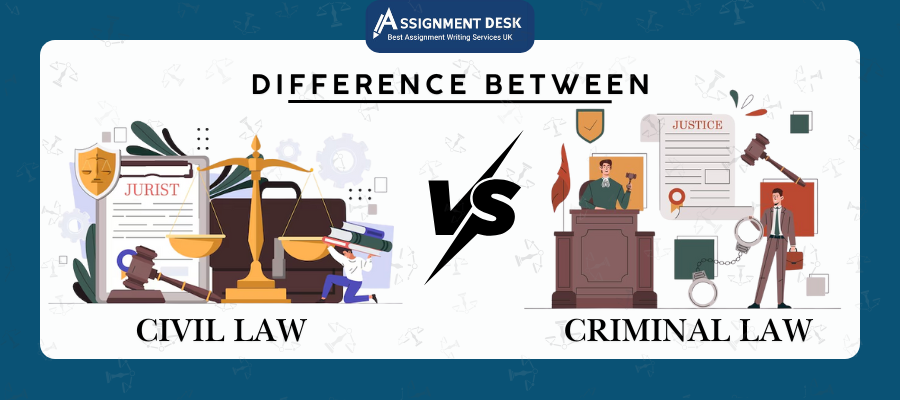














 Update your Number