Change is inevitable, especially for business organisations, because it helps them stay competitive, profitable and relevant with ongoing market trends. However, the problem arises when a firm tries to apply these changes. Hence, Kotter's Change Model offers an organised structure to companies for incorporating changes within their culture. Although it has a structured format, including eight key steps, the application of this model requires a precise understanding.
In this guide, you will see a detailed breakdown of these steps with the Kotter model advantages and disadvantages that allow transformations in business firms and lead to success.
What is Kotter's Change Model?
Kotter's change management theory was proposed by Dr John P. Kotter after analysing and observing multiple leaders who were struggling to apply changes in their organisations. This model emphasised creating an easy process for change application that will help in organisational transformation. Hence, Kotter defines this model as an eight-step procedure to help managers and leaders implement business transformation successfully.
It emphasises creating long-term change and overcoming resistance towards change through its 8-step change management framework. But have you ever imagined why organisations require such models to apply changes? Well, read the section below to find your answer.
Why is a Structured Change Management Needed in an Organisation?
A systematised change management model is crucial for minimising disruption, ensuring project success and reducing employee resistance through effective management of people.
- Minimise Resistance - A structured model allows leaders to communicate potential changes in advance with their employees. It increases their involvement in business change strategy and reduces opposition or fear. As a result, employees accept these changes and collaborate happily.
- Mitigates Risks - Organised approaches for change implementation help in identifying probable issues in advance, such as updates in technologies or changes in culture. It prevents compliance gaps or financial losses.
- Faster Transitions - A systematic organisational change management process reduces operational downtime, learning curves and confusion. A structured model addresses operational and human challenges instantly, which reduces resistance and minimises disruptions.
In easy words, just like the Rolfe reflective model is essential for bringing change in an individual's personality. This model is required for implementing systematic changes in an organisation.
What are the 8 Steps of Kotter's Change?
Kotter's change model is one of the renowned processes for developing a transformational leadership strategy without any complication. This framework ensures organisational changes are successful and long-term through the following eight steps:
Create Urgency
According to this model, leaders must create a feeling of urgency for managing organisational change effectively. In simple words, the method starts by recognising potential opportunities or uncertain risks that require fast action. Moreover, at this stage, the manager needs to communicate why the change is crucial to subordinates. For this, they can use statistical data to build trust and motivate employees for this change.
Build A Guiding Coalition
At this stage of John Kotter change model, the change leader creates an influential and strong team to manage change and lead the entire initiative. However, for the successful implementation of change, the manager must form a team that includes expert and skilled individuals from each level. It may include leaders with an authoritative designation or employees who have a positive influence on their colleagues. This new team will work collaboratively to apply new policies within the culture.
The next step requires the change manager to create a captivating vision for motivating employees for the new changes. This vision must contain what your desired results are and determine key strategies that will allow the organisation to achieve those outcomes. It helps in reducing employee resistance to change because they understand how this change will benefit the organisation and each individual associated with it. However, make sure that you create a vision that aligns with employees' personal goals.
Communicate Your Vision
After completing the previous step of the Kotter change model, it is crucial to communicate this vision frequently with all members of the organisation. This process helps in building support for implementing changes. Moreover, it ensures that all employees are at an identical stage and are aware of the organisation's vision. It is a crucial phase because it is the first step which helps in ensuring everyone knows about the plan and understands their roles in this change management process.
Enable Action & Eliminate Obstacles
Identifying the potential obstacle is crucial for implementing the plan without major errors. Hence, it is a crucial phase of Kotter's 8 steps of change management that helps practitioners identify and eliminate potential problems. These obstacles can be cultural, like employee resistance or structural, like outdated machinery. Elimination of these issues helps managers to create an atmosphere where each employee can feel involved and motivated to contribute to change.
Create Short-Term Wins
Change implementation is a long-term process, and results may be delayed, which can demotivate the employees. In this scenario, it is crucial to celebrate even small wins to boost their morale. Moreover, these quick wins are tangible evidence that shows how changes can lead to better outcomes. Identifying and interacting with these accomplishments can indicate the positive influence of changes and lead to continuous efforts.
Consolidate Improvements
It is one of the crucial steps of Kotter change management steps, which helps maintain concentration and allows the change teams to work with a meticulous plan. This phase requires scaling the shifts across the entire firm, analysing the quick wins and addressing remaining issues. It emphasises perpetual enhancements, which ensure that each change process functions appropriately without losing momentum before its complete implementation.
Anchor Changes in Culture
Last step requires change management to ensure that new methods, mindsets, or behaviours are rooted in their corporate culture. This phase includes reinforcing all changes by connecting them to the organisation's success. Moreover, it is the manager's responsibility to make sure that it becomes a major part of their firm's operations.
Remember, the process is not over, as it requires continuous monitoring, feedback and minor changes to keep it profitable for your organisation.
Case Study: Application of Kotter's Model in Real Organisations
Now, to understand this model precisely and how it works, here is the Kotter change model case study of the Microsoft company.
|
Case Study - Application of Kotter's Change Model at Microsoft in 2020 - 2021
Issue - The company planned to accelerate its process by shifting to hybrid work and cloud services after the COVID-19 pandemic. This change was crucial for staying competitive.
How did the organisation implement Kotter's Model?
Step 1 - The chief executive of the market head shared current data and stats showing the rapid growth and use of cloud computing. It allowed them to create a sense of urgency.
Step 2 - Senior executives of the organisation created a cross-department team to propel the new change, which was crucial for forming a coalition.
Step 3 - Each member focused on developing a vision, which was “cloud-first, mobile-first” facilities.
Step 4 - After deciding the organisation's vision, the team head communicated the vision to their colleagues and other employees through webinars, workshops and internal updates.
Step 5 - At this stage, employees of the Microsoft organisation were trained to use new tools, including Azure and Teams, to empower action.
Step 6 - Early adoption by employees indicated their skills and led to measurable success. These quick wins were celebrated and acknowledged by seniors.
Step 7 - The change process was monitored thoroughly by team head. All executives sought feedback from employees across different levels to consolidate gains.
Step 8 - Finally, these tools became a crucial part of Microsoft's organisational culture and regular operations.
In this way, the organisation successfully adapted to the Cloud growth and remote work, which enhanced overall productivity and profits.
|
This case study provides a complete structure for students seeking assignment help UK to apply Kotter's model in an organisation. Students can use this example to understand a precise way of applying this change management theory.
Pros and Cons of Kotter's Change Model
After reading the above case study, you are wondering whether Kotter's change model is highly beneficial. Yes. That's true, but it has a few drawbacks too. Hence, this section provides information on the pros and cons of the Kotter change model.
Benefits of Kotter Change Model
Here are a few benefits of the Kotter change model that help organisations:
- Precise Format - It provides a clear and linear roadmap that allows strategic change management in organisations. It simplifies the entire change management process for both employees and managers. Moreover, each step allows managers to make logical and rational decisions.
- Leadership-Centric - This change management theory focuses on leadership coalitions for driving change. This model recognises the importance of strong leadership. Hence, it ensures managers handle these changes effectively and fosters commitment at managerial levels.
- Enable Obstacle Management - Kotter leadership model encourages analysis of potential barriers in advance and removing them to make the change process smooth. This helps companies to deal with issues which could affect their progress.
Limitations of Kotter Change Model
Kotter's organisational change management model possesses the following limitations:
- Linear Progression - It follows a rigid process that limits flexibility, especially when an organisation requires rapid changes. This structure may reduce an organisation's possibilities to attain first-mover advantages.
- Lengthy Process - This change leadership model is time-consuming and requires managers to follow each step with precision. Hence, for firms seeking quick changes, this model can be inappropriate.
- Avoid Personal Barriers - While the model focuses on a firm's barriers, it avoids individuals' issues, which they face during the change implementation process. It lacks attention to emotional, psychological or personal issues, which results in employee resistance.
Final Thoughts
In a nutshell, Kotter's change model provides a blend of effective leadership, active engagement and clear vision to lead change within an organisation. Hence, this framework remains a proven and relevant roadmap to drive sustainable transformations in companies. Today's business requires rapid changes and continuous transformation, as is clear from the above Kotter model example of the Microsoft company. However, if you are struggling to apply this model in your assignments even after reading the case study, connect with professional writers at Assignment Desk. Our experts possess deep knowledge of this model, which assists them in creating the best projects from scratch. So, connect today!



 Company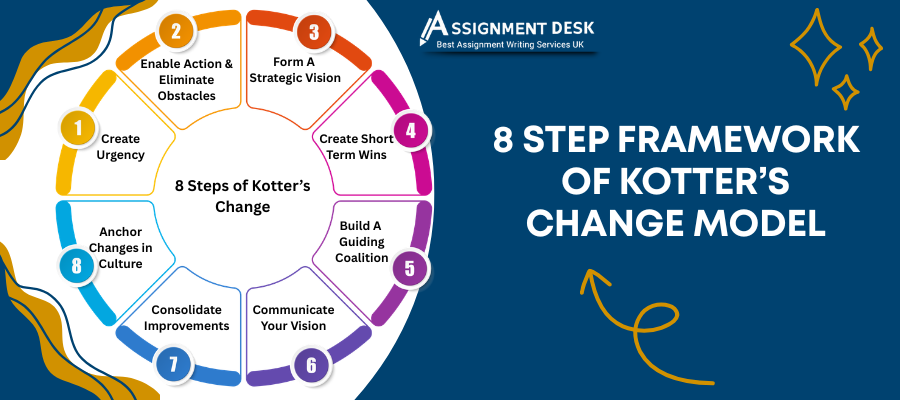









 Update your Number