


 Company
INTRODUCTION
1.1 Overview of Patagonia
Patagonia is a multinational outdoor apparel, accessories, and equipment producer, founded in 1973 by Yvon Chouinard, and a leading innovator in sustainable luxury retail (Patagonia, 2025a). With over 70 physical stores around the globe and a presence in over 100 countries, Patagonia has created a high-end brand with environmental responsibility, product durability, and business ethics at its core (Alonso, 2023). Its products include high-quality performance wear that can be used in harsh outdoor settings, with a focus on innovation in materials and resource use rather than short-lived fashions. Patagonia employs 99% preferred materials, such as recycled polyester, organic cotton, and natural fibres, which greatly mitigate the lifecycle emissions of its supply chain (Patagonia, 2025b). In 2022, the company achieved the top environmental score among all B Corporations worldwide, further strengthening its certified sustainability and open governance reputation (Patagonia, 2025d). Its much-publicised pledge to give away 1% of annual earnings to environmental groups and the recent declaration that 100% of corporate earnings would now be given to climate restoration work, enhanced by the legal transfer of ownership to a climate trust, testify to a long-term commitment to corporate activism.
1.2 Reason for Selecting Patagonia
Incorporating anti-consumption beliefs into high-end retail locations and its globally known circular business strategy make Patagonia an inspiring study of sustainable luxury (Shams, Brown and Hardcastle, 2025). Notable efforts like the Worn Wear repair and resale scheme have decreased textile waste going to landfill and helped customers prolong product life through repair and reuse. The Don't Buy This Jacket campaign urged careful shopping and leveraged emotional appeal and brand devotion to make a mark in traditional luxury promotion. Patagonia is pioneering a regenerative luxury model and offers an interesting model of analysis of circularity, customer connection, and brand worth in sustainable luxury shopping.
“For a deeper understanding of this topic, you can also read our detailed guide assignment help
LITERATURE REVIEW
2.1 Overview
This part is a critical analysis of scholarly opinions and luxury retail industry trends on sustainability, in particular, Patagonia's circular business model. It reviews studies in sustainable luxury consumption, motivations and facilitators for ethical purchase, and luxury and sustainability irony. This section analyses Patagonia's circular production, experiential retail, omnichannel delivery and sustainable communication strategies using circular economy theory, systems theory, and integrated marketing communications (IMC) theory. The literature review is on how Patagonia's sustainability efforts impact consumer response and brand value in modern sustainable luxury retail.
2.2 Understanding Circular Economy Theory and Its Relevance to Luxury Fashion
Sustainable luxury has developed as a revolutionary field in which products of high quality should exhibit high-functional quality, and also environmental and social responsibility. The traditional values of luxury have been related to exclusivity, rarity, aestheticism and symbolic consumption. Nevertheless, nowadays consumer demands have turned to ethical sourcing, transparency, and reduction of environmental impact (Shukla et al., 2025). The rise of conscious consumerism has subjected luxury brands to greater pressure to be as circular in business and to be genuinely sustainable rather than pretentious.
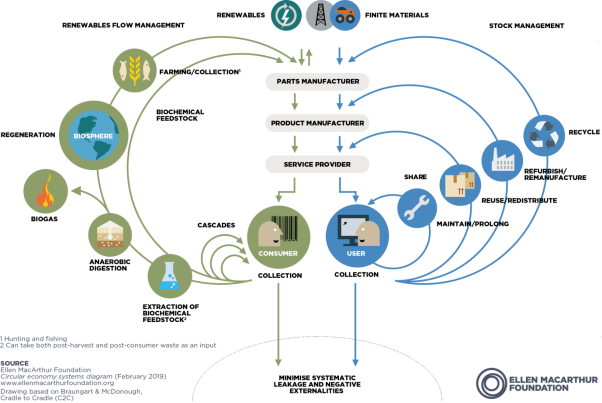
Figure 1: What is a Circular Economy
Source: (Interaction Design Foundation, 2023)
Sustainable luxury values such as authenticity, accountability, and durability affect consumer tastes away from fast consumption. Eco-friendly items are becoming more important to millennials and Gen Z, and they're willing to spend more. Sustainable luxury consumption faces the attitude-behaviour gap, where economic, cultural, and aesthetic barriers prevent the translation of ethical concern into consumption. Many customers are greenwashing causes may doubt environmental promises and make ethical luxury things seem less stylish or technologically advanced (Andrade and Vieites, 2025). The consumptive nature of luxury clothes and the sustainability concepts of minimising materials and resources also conflict.
Patagonia handles these issues of the industry by not promoting sustainability as a layer but as a core business philosophy. The company advocates repairability, long product lifecycle and less use, highlighted with campaigns like “Don't Buy This Jacket” and Worn Wear programmes, which defy luxury standards by focusing on the product life, rather than on sales. This positioning contrasts with the traditional luxury competitors, who traditionally depend on seasonal novelty and status.
“For a deeper understanding of this topic, you can also read our detailed marketing assignment help
2.3 Theoretical Frameworks

Figure 2: Theoretical Framework
Patagonia's sustainability approach is based on Circular Economy Theory. Reuse, repair, remanufacture, and recycling decrease waste, extend product life, and keep resources in circulation under the circular model (Rahla, Mateus and Bragança, 2021). Patagonia's Worn Wear Program, repair services, and resale operations use this approach to change from linear take-make-waste to regenerative production. This idea helps explain how Patagonia's resource-efficient innovation and long-life product design provide environmental and customer value.
Systems theory helps Patagonia analyse its sustainability efforts' interconnectivity. Systems theory states that organisations are part of a system where changes affect other systems (Hong, 2024). According to Patagonia, sustainable material sourcing affects distribution, manufacturing, retail, and consumer behaviour. The idea highlights Patagonia's complete model of material innovation, supply chain transparency, repair services, and activist communication to support sustainability and consumer interactions.
Integrated Marketing Communications (IMC) Theory describes the alignment of messages in various touchpoints to create trust and authenticity, which Patagonia does (Pham, 2025). In IMC, brands convey consistent values via channels like social media, retail experience, web platforms and community activism. Patagonia uses IMC to support the stories of environmental conservation and responsible purchasing, leveraging transparency reports, repair classes and activist campaigns to enhance emotional appeal and distinguish brand identity.
2.4 Critical Evaluation of Patagonia's Circular Business Model and Material Recirculation Initiatives
According to Medium (2021), the circular model of business that Patagonia has is heavily recognised as one of the most advanced in the field of luxury apparel. It incorporates circular design, responsible sourcing, repair and resale to reduce the environmental impact. An example of material used by Patagonia is recycled polyester, organic cotton and NetPlus nylon that was made of abandoned fishing nets, which is backed by supply chain transparency, including published factory lists and social compliance audits. This solution shifts the burden onto production choices and will lessen the use of virgin materials and carbon emissions.
The resale initiative and repair program. Worn Wear is a circular consumption program that promotes repairs instead of replacing products. According to Jindal and Gouri, (2024), Patagonia has repair centres across the world and mends over 100,000 products every year, which considerably extends the lifespan of their products and minimises waste. The ReCrafted line of products is reusing material resources by turning used clothes into new pieces of art and is also innovative in terms of artistic reconstruction. The consumption implications are significant: customers are the participants of sustainability, who emotionally follow the brand purpose and purchase in a more responsible way (Gong et al., 2023).
Instead of transactional distribution, Patagonia uses low-emission logistics, eco-friendly packaging, and digital capabilities for traceability and education. Traditional luxury distribution channels focused on seasonal diffusion, exclusivity, and trend speed are challenged by the concept. The strategy has a strong advantage in the context of sustainability-focused customers, but its slower commercial scalability compared to traditional luxury giants, who rely on volume and symbolic consumption, is a drawback (Nuotio, 2024). Some buyers also find Patagonia's basic look unattractive or untrendy, which may limit luxury usage
2.5 Customer Engagement and Brand Value within Sustainable Luxury Consumption
Patagonia's circular business model is widely recognised as one of the most advanced in the luxury apparel industry strategies of Patagonia is very sustainable. According to Wang (2024), physical retail stores are used as pedagogical and interactive environments, with repair centres, interior designs, and narrative displays of how a product is made and the path of materials. Such touch and feel and immersion create emotional attachment and brand loyalty. Experience servicescapes help to deliver authenticity by literally and physically supporting the values that Patagonia has in the consumer decision-making process.
The omnichannel approach combines physical retail outlets, the Patagonia online store, mobile applications, and social media outlets into a single story. The digital servicescape of Patagonia focuses on transparency by providing product tracking services, sustainability metrics, and education on clothing care. This enables the customers to interact beyond the purchase (Patov, 2024).
Patagonia uses honest storytelling and activist messages in its marketing. Campaigns like US public land oppression and climate action films strengthen environmental justice. By providing evidence-based verification, Fair Trade and B-Corp accreditation boost legitimacy and reduce greenwashing suspicion. However, Patagonia may be too aggressive to attract commercially conservative customers and difficult to localise in countries where environmental involvement conflicts with social or political ideals.
2.6 Summary of the Chapter
The chapter has surveyed scholarly sources and theories pertinent to sustainable luxury consumption and interpreted the Patagonia case of a circular business model, sustainability strategies, and communication. It showed the way Patagonia applies the principles of the circular economy, systems thinking, and IMC frameworks to operationalise sustainability in production, distribution, retail experience, and communication. A substantial perspective of circularity-orientated competitive advantage was found in the literature, and the current obstacles comprised aesthetic resistance, anti-consumption stress, and scale constraint. It is based on these insights that the critical discussion below is founded.
DISCUSSION
3.1 Introduction
The critical conversation examines Patagonia's circular business model, sustainable luxury consumerism, immersive omnichannel servicescapes, and sustainability-based communication techniques. This chapter combines theoretical knowledge with academic and industrial actual facts to address structural conflicts, systemic issues, and competitive ramifications rather than Patagonia's actions. The analysis shows Patagonia's circularity strategy affects consumer interest and brand value and illustrates luxury sector pressures that limit scalability and change.
3.2 Evaluating the Influence of Patagonia's Circular Business Model on Sustainable Luxury Consumption
The sustainable consumption of luxury goods is characterised by numerous internal contradictions. Consumer survey results often show an increased ethical concern, but purchasing behaviour still reflects aesthetic desirability, convenience, and symbolic identity, which is an established attitude-behavior gap (Kam and Yoo, 2022).
Figure 3: The clothing industry contributes up to 10% of the pollution driving the climate crisis.
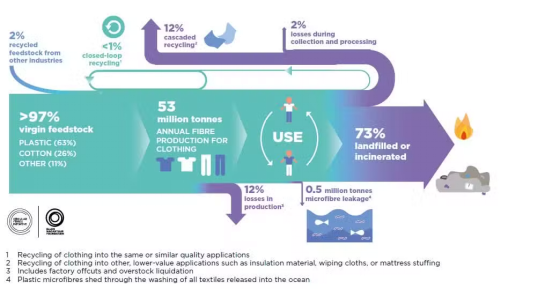
Source: (Science Feedback, 2020)
Emotional resonance and self-concept signalling thus play a determining factor in influencing sustainable purchase intentions, overriding solely functional environmental information. Patagonia uses this behavioural dynamic by incorporating activism and value-centered storytelling into its circular business model and trying to transform awareness into action. The campaigns, like Don't Buy This Jacket, playfully reverse the typical promotional reasoning, positioning lower consumption as a better ethical decision, indicating identity with the environmental movement, but not social status.
Burnstine and Ghattas (2025) contend that circular supply chains are not intended to mean an end to profitability but a facilitator of long-term economic strength and competitive edge. Patagonia sets an example with Worn Wear systems and ReCrafted systems, which transform repair and reuse into strategic value creation to show how material recirculation creates loyalty and brand equity. According to the systems theory, organisational sustainability performance arises as a result of interdependent interplay among supply chain practices, product design, retail experience and communication frameworks (Shourkaei, Taylor and Dyck, 2023). Patagonia demonstrates this integration of systems by matching internal processes with external communications and maintaining sustainability as an inherent structural value and not a marketing feature.
Nevertheless, critical analysis reveals that there are still areas of tension. According to Suston (2025), the anti-consumption ethos of Patagonia limits the ability to scale revenues in comparison with profit-seeking luxury rivals, and the ecological responsibility clashes with business growth. The Ellen MacArthur Foundation (2022) reports that the fashion industry contributes over 10% of all carbon emissions into the atmosphere; therefore, despite the structural unsustainability of the macro-environment, leading circular models are being implemented.
Figure 4: Business Unusual of Patagonia
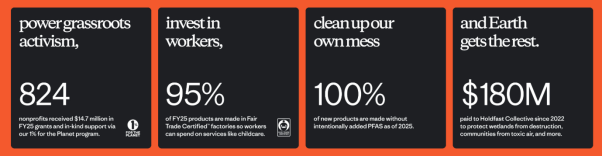
Source: (Patagonia, 2025b)
The 2025 Impact Report by Patagonia recognises improvements in emission reduction in outsourced manufacturing and transport networks, which demonstrates that globalised production dependencies still inhibit circularity (Patagonia, 2025b). The tenacity of aesthetic and cultural opposition to second-life goods also strengthens consumer ambivalence, especially in luxury markets that traditionally are determined by novelty and exclusivity. Therefore, structural obstacles limit systemic change, despite Patagonia's promotion of behavioural change.
3.3 Critical Analysis of Experiential Retail Servicescapes and Omnichannel Customer Engagement
The experiential servicescapes at Patagonia are planned to transform retail spaces into participatory sustainability systems instead of transactional spaces. The realness of materialism is created in repair stations, recycled material architecture, and educational displays and serves to improve emotional belonging and experience (Patagonia, 2025c). This is consistent with the Kam and Yoo (2022) results that sensory experience and emotional story have a significant positive impact on consumer commitment to sustainable fashion. The servicescape as evidence-based activism helps distinguish Patagonia among its competitors who use symbolic sustainability statements.
The omnichannel ecosystem of Patagonia strengthens engagement with the help of digital traceability tools, repair tutorials, sustainability dashboards, and narrative storytelling (Patagonia, 2025d). However, there are still structural constraints. According to the World Economic Forum (2023), the most frequent contributor in the production of industrial carbon is Scope 3, which is associated with logistics, suppliers, and material sourcing, and it involves a multi-stakeholder coordination that has to be tough. This reveals the strategic weakness of Patagonia: transparency in retail will not offset embedded industry emissions regimes, and substantial decarbonisation is beyond the power of an individual organisation.
Remanufacturing and waste-to-resource transformation employing Worn Wear and ReCrafted are becoming industrial strategic requirements, according to Zheng (2024). However, Suston (2025) states that scaling repairs models are logistically complicated and expensive for Patagonia, especially in areas without infrastructure. The experiential and omnichannel approach can boost distinction, but it limits operational elasticity and profitability and throws doubt on premium markets' long-term competitiveness, where financial velocity is key.
“For a deeper understanding of this topic, you can also read our detailed guide assignment example
3.4 Assessing the Role of Transparency and Value-Led Communication in Strengthening Brand Trust
The communication framework of Patagonia implements IMC Theory via consistent, cross-channel consistency of activist messaging, transparent reporting and education-based stories. Verifiable impact data, such as transparency in failure disclosure, distinguishes Patagonia among those brands accused of hypocritical greenwashing (Patagonia, 2025b), and emotional strength and narration build identity-grounded loyalty (Kam and Yoo, 2022). According to the Ellen MacArthur Foundation (2022), consumer engagement depends on participatory transparency, which contributes to the approach of Patagonia, which mobilises customers as agents of sustainability instead of passive recipients.
However, Suston (2025) states that the Patagonia activism-focused communication is subject to ideological polarisation, which decreases mass-market appeal and diminishes, cultural fit in areas where environmental activism intersects with political sensitivity. Systematic emissions and scaling limits, as outlined by World Economic Forum (2023), indicate that transparency cannot address structural inadequacies. The communication by Patagonia is effective to enhance ethical legitimacy but cannot reconcile independently operational constraints or global complexity.
3.5 Summary
The discussion shows how Patagonia can redefine sustainable luxury by being circular and engaging in experiential and open communication but reveals differences between purpose-driven identity and commercial scalability. It is due to these tensions that strategic suggestions that focus on systemic, behavioural and operational change are suggested.
4. Conclusion
This report critically analysed the conceptual business model behind Patagonia and the effect it has on brand value and consumer interest in sustainable luxury retail. This analysis has demonstrated that Patagonia has fulfilled industry expectations of accountability, integrating repair, resale and material recirculation programmes, creating an effective emotional bond and a viable branding pattern. But systemic issues such as scaling, complexity of operations, and cultural heterogeneity in the adoption of sustainability remain a limitation to broader market influence. While Patagonia's transparency and the experiential servicescape enhance its authenticity, significant sector-wide change will require support for infrastructure and strategic adjustments that extend beyond activist-oriented audiences.
5. Recommendations
Three strategic suggestions are offered to enhance Patagonia's circular and consumer interactions and brand value in sustainable luxury retail.
Implement AR-enabled Traceability and Material Storytelling
AR technology that lets shoppers scan garments to understand sourcing, work conditions, and environmental impact would boost emotional connection and behaviour modification. The Ellen MacArthur Foundation (2022) predicts that openness and involvement will accelerate circular consumer adoption, so immersive disclosure can reduce scepticism and strengthen identity-bound devotion.
Decentralised Regional Repair Hubs
High repair logistics and scalability constraints: Suston (2025) suggests localised micro-repair stations to reduce operational emissions, enhance second-life product selection, and address World Economic Forum (2023) Scope 3 limitations.
Develop hyper-localised cultural communication strategies
Since Suston (2025) criticises global activism communications for polarising, regionalising the message and aligning it to local social ideals and sustainability realities will increase inclusivity and consumer access beyond activist-oriented viewers.
Read more -EcoRide - Electric Bike Rental Database SystemREFERENCES
- Alonso, T. (2023). How Patagonia Became the Benchmark in Sustainable Clothing. [online] Cascade. Available at: https://www.cascade.app/studies/patagonia-strategy-study.
- Andrade, E.B. and Vieites, Y. (2025). Obstacles and Opportunities for Sustainable consumption: a Comprehensive Conceptual model, Literature review, and Research Agenda. Journal of Consumer Psychology. doi:https://doi.org/10.1002/jcpy.70003.
- Burnstine, A.P. and Ghattas, R. (2025). Assessing the Sustainable Circular Fashion Supply Chain as a Model for Achieving Economic Growth in the Global Market. Sustainability, 17(19), pp.8558-8558. doi:https://doi.org/10.3390/su17198558.
- Ellen MacArthur Foundation (2022). Fashion and the Circular Economy. [online] Ellen MacArthur Foundation. Available at: https://www.ellenmacarthurfoundation.org/topics/fashion/overview.
- Gong, Y., Xiao, J., Tang, X. and Li, J. (2023). How Sustainable Marketing Influences the Customer Engagement and Sustainable Purchase intention? the Moderating Role of Corporate Social Responsibility. Frontiers in Psychology, 14(1128686). doi:https://doi.org/10.3389/fpsyg.2023.1128686.
- Hong, T.K. (2024). Navigating Ethical Frontiers: Patagonia's Approach to Globalization, Sustainability, and Ethical... ResearchGate. doi:https://doi.org/10.13140/RG.2.2.26130.36807.
- Interaction Design Foundation (2023). What Is a Circular Economy. [online] The Interaction Design Foundation. Available at: https://www.interaction-design.org/literature/topics/circular-economy?srsltid=AfmBOorqIDJo9NZsTY7isC2i-ZxDT3NvJug37fXlWT8_kZb8mlvE9gbK.
- Jindal, P. and Gouri, H. (2024). Circular Economy Models. Advances in Business Strategy and Competitive Advantage Book Series, pp.53-78. doi:https://doi.org/10.4018/979-8-3693-4338-8.ch003.
- Kam, S. and Yoo, Y. (2022). Practice of Sustainable Fashion Design considering Customer Emotions and Personal Tastes. Frontiers in Psychology, 13. doi:https://doi.org/10.3389/fpsyg.2022.976471.
- Medium (2021). Patagonia: Innovation Culture and Sustainability — a Look at Their Circular Business Model. [online] Medium. Available at: https://reallygoodinnovation.medium.com/patagonia-innovation-culture-and-sustainability-a-look-at-their-circular-business-model-fbebbe9d97a7.
- Nuotio, A. (2024). The Role of Sustainability in Shaping the Future of Luxury Fashion Marketing. [online] Aalto.fi. Available at: https://aaltodoc.aalto.fi/items/9aed4b91-577f-4101-ae56-03375b4e3473.
- Patagonia (2025a). Company History. [online] Patagonia. Available at: https://www.patagonia.com/company-history/.
- Patagonia (2025b). Patagonia 2025 Impact Report. [online] Patagonia.com. Available at: https://www.patagonia.com/progress-report/.
- Patagonia (2025c). Patagonia Outdoor Clothing & Gear. [online] www.patagonia.com. Available at: https://www.patagonia.com/where-we-do-business/.
- Patagonia (2025d). Social Responsibility. [online] Patagonia. Available at: https://www.patagonia.com/social-responsibility/.
- Patagonia (2025). Patagonia Works in Progress. [online] Patagonia Works. Available at: https://www.patagoniaworks.com/press/2025/11/11/patagonia-a-work-in-progress.
- Patov, A. (2024). How Patagonia Enhances Customer Experience (CX) with a Commitment to Sustainability. [online] Renascence.io. Available at: https://www.renascence.io/journal/how-patagonia-enhances-customer-experience-cx-with-a-commitment-to-sustainability.
- Pham, H. (2025). The Influence of Corporate Social Responsibility (CSR) on Brand Equity : from Sustainable Marketing Perspectives. Theseus.fi. doi:http://www.theseus.fi/handle/10024/892153.
- Rahla, K.M., Mateus, R. and Bragança, L. (2021). Implementing Circular Economy Strategies in Buildings—From Theory to Practice. Applied System Innovation, 4(2), p.26. doi:https://doi.org/10.3390/asi4020026.
- Science Feedback (2020). The Clothing Industry Produces 3 to 10% of Global Greenhouse Gas emissions, as Accurately Claimed in Patagonia Post - Science Feedback. [online] https://science.feedback.org/. Available at: https://science.feedback.org/review/the-clothing-industry-produces-3-to-10-of-global-greenhouse-gas-emissions-as-accurately-claimed-in-patagonia-post/.
- Shams, S.M.R., Brown, D.M. and Hardcastle, K. (2025). Product and Service Development for People, Planet, and Profit. Classroom Companion: Business, pp.103-167. doi:https://doi.org/10.1007/978-3-031-79130-7_2.
- Shourkaei, M.M., Taylor, K.M. and Dyck, B. (2023). Examining Sustainable Supply Chain Management via a Social‐symbolic Work lens: Lessons from Patagonia. Business Strategy and the Environment, 33(2), pp.1477-1496. doi:https://doi.org/10.1002/bse.3552.
- Shukla, P., Rosendo‐Rios, V., Dubois, D., Valette‐Florence, P. and Stathopoulou, A. (2025). Luxury: Where Next? Psychology and Marketing. doi:https://doi.org/10.1002/mar.22244.
- Suston (2025). The Good and the Bad in Patagonia's New Impact Report - Suston Magazine. [online] Suston Magazine. Available at: https://sustonmagazine.com/patagonia-work-in-progress-impact-report-2025/.
- Wang, M. (2024). The Role of Interactive Technologies in the Physical Retail Fashion Store - White Rose eTheses Online. Whiterose.ac.uk. doi:https://etheses.whiterose.ac.uk/35947/1/Wang_M_Design_PhD_2024.pdf.
- World Economic Forum (2023). ‘No-Excuse' Opportunities to Tackle Scope 3 Emissions in Manufacturing. [online] World Economic Forum. Available at: https://www.weforum.org/publications/the-no-excuse-opportunities-to-tackle-scope-3-emissions-in-manufacturing-and-value-chains/.
- Zheng, X. (2024). Exploring the Circular Economy in the Fashion Industry: Transforming Waste into Valuable Resources. Communications in Humanities Research, 45(1), pp.172-178. doi:https://doi.org/10.54254/2753-7064/45/20240106.

UPTO55%
Avail The Benefit Today!
To View this & another 50000+ free








 Update your Number